AI Meets Product Judgment
I was asked to improve the “Similar homes for sale” section on rental listing pages. Redfin’s rental business also serves as a way to build relationships with future homebuyers—a role that became even more important after Rocket, a mortgage company, acquired Redfin. The opportunity was to engage renters who might be close to buying by helping them discover homes for sale and bringing them into Redfin's brokerage experience.
At a crossroads
I started with user research to understand the biggest barriers renters face when buying a home. Finance came first. I explored how the section could help renters understand down payments, interest rates, and the rent-versus-buy decision.
Location was another barrier renters raised in research. I explored recommending popular starter-home suburbs to help renters discover where buying might be more attainable.
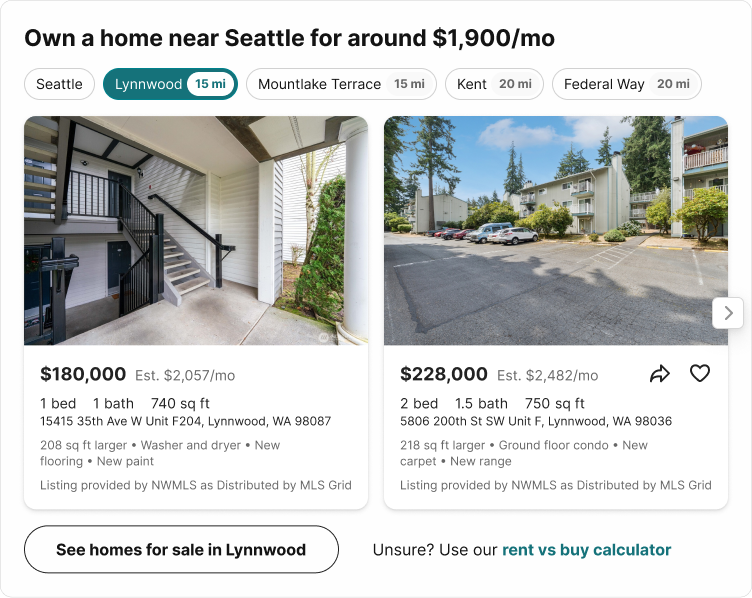
But we didn't have enough evidence to know whether either direction was the right one. The bigger question remained: should we help renters understand what they could afford, or keep browsing open and simple? I needed to find out what renters were actually looking for.
Into the data
My PM and I turned to Snowflake’s AI to investigate how renters who also browse homes for sale behave. I used it to surface patterns, then evaluated which findings had the strongest potential to shape our recommendations. We started with price and location, the two factors we expected to matter most.
The data changed the direction
Our first assumption didn’t hold up. We expected renters to browse homes priced near their rent, but they usually looked well above it. Home prices depended on both rent and market conditions, and neither could predict them alone.
A price range tied too closely to the rental listing could actually work against us. It also disproportionately attracts renters in cheaper rentals, who weren't the audience we most wanted to reach.
And their paths didn't all move in the same direction. About a third eventually looked at cheaper homes, while another third traded up. They were recalibrating what they wanted along the way, and I didn't want our recommendations to narrow that exploration.
I was excited to have learned something I didn’t know!
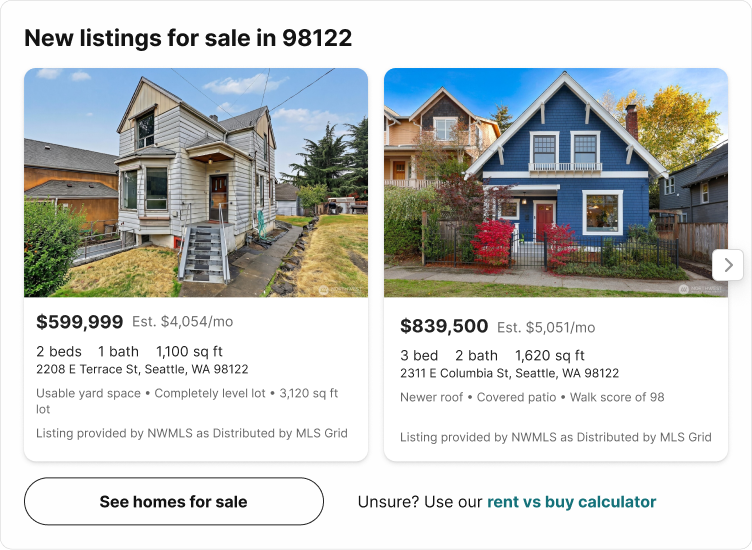
Then another lead emerged. My PM found that New Listings without a price cap outperformed every other recommendation section on buy-side pages.
But I didn't want to assume that meant a price cap couldn't make it even better. I used Snowflake AI to dig into listing-level behavior and found that the most expensive listings actually received more views per listing. Adding a cap could hide the very homes drawing the most interest.
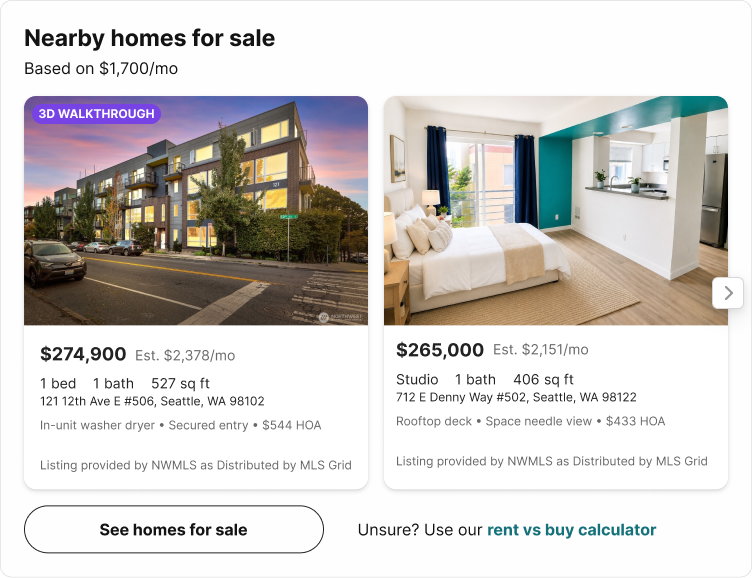
Together, these findings pointed toward giving renters more room to explore, rather than assuming their current rent reflected what they wanted to buy. We moved forward with two approaches: a wider rent-based price range and unrestricted New Listings. Both are built and queued for A/B testing. We'll measure click-throughs to recommended homes for sale, with rental conversion as a guardrail.
Wider price range around rent
New listings without price cap
One more finding changed my own direction. The section already surfaced homes that matched where renters looked to buy. My location proposal wasn’t addressing a gap after all, so I dropped it.
The next stretch
With two promising directions identified, we expanded the work to Rent and ApartmentGuide, two of Redfin's other domains. ut a new obstacle stood in our way: neither domain holds a brokerage license, limiting the listing information we could show.
My PM was ready to explore a new direction to account for the constraint. I pushed to build on what we'd already learned instead. We adapted the two approaches: rent-based recommendations, and newest listings without a price cap to keep browsing open. We found another way around the licensing constraint: show licensed Redfin agent listings where available, and property-type searches where they weren't.
UI work still in progress
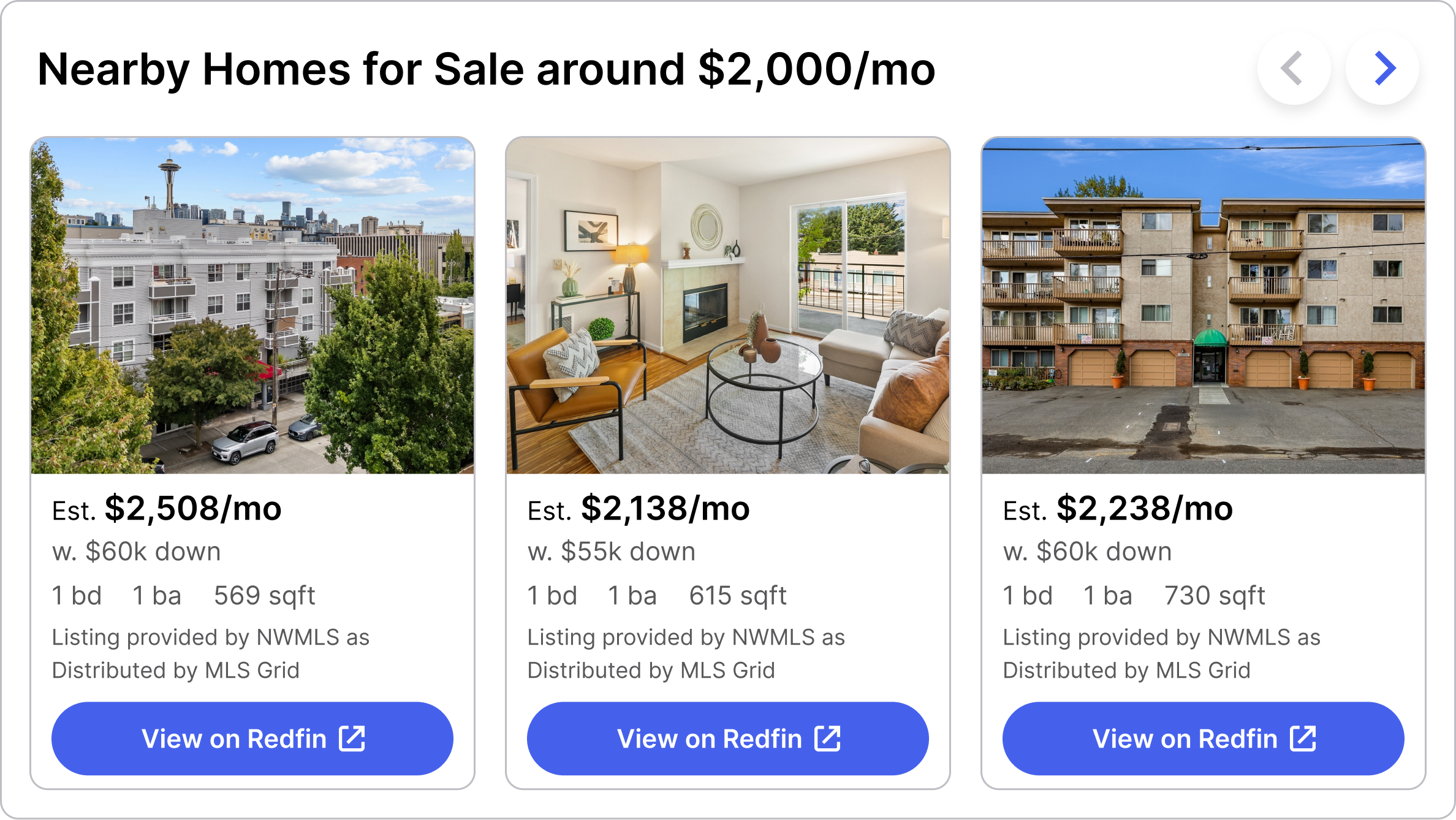
Getting the recommendations onto these sites was only half the challenge. Rent and ApartmentGuide had always been rental-focused, so we needed to make sure renters could tell at a glance that these homes were for sale.
I built this tool that analyzes the dominant colors in listing photos and evaluates how different badges stand out against them. It also gave my teammates a tool to support their work on the Design System update.
What I carry forward
This project changed how I approach product questions with data. It helped my PM and me investigate more complex patterns in user behavior than a single metric could reveal, explore potential approaches, and estimate the audiences they might reach before committing engineering time.
But I didn't take the answers at face value. I checked the underlying calculations and assumptions, then broke down results by price and market, compared user segments, and explored alternative signals and ways to measure them.
AI helped me challenge assumptions, explore competing ideas, and give the team stronger evidence to act on. The project had a way forward. I had a new way to find one.